

Are backlinks losing their power in modern SEO?
With AI-driven search, Google AI Overviews, semantic indexing, and machine learning influencing search engine optimization, many business owners are asking whether backlinks still matter. If Google can monitor content quality, user behavior, and search intent so precisely, is external linking still necessary?
The short answer is that backlinks have not disappeared — but their role has broadened. In 2026, backlinks are no longer shortcuts to rankings. They are authority validators within a much bigger SEO ecosystem.
To understand their relevance today, we need to examine how search engines actually use link signals.
Table of Contents
- Why have backlinks been questioned in recent years?
- How do backlinks influence rankings in 2026?
- If content is high quality, are backlinks still necessary?
- Do backlinks help with Google AI Overviews?
- What has replaced spam link building in 2026?
- Are backlinks the most important SEO factor in 2026?
- Can businesses succeed without a backlink strategy?
- So, are backlinks still worth investing in?
Why have backlinks been questioned in recent years?
Over the past few years, Google’s algorithm updates have aggressively targeted manipulative link building practices. Private blog networks, bulk directory submissions, automated link exchanges, and paid backlink schemes have become risky and ineffective.
At the same time, Google has emphasized E-E-A-T (Experience, Expertise, Authoritativeness, Trustworthiness), helpful content signals, and user engagement metrics. Because of this shift, many speculated that content quality alone replaced backlinks as a ranking factor.
However, this interpretation misunderstands how ranking systems work. Content quality determines relevance. Backlinks help establish authority. These two signals serve different purposes.
How do backlinks influence rankings in 2026?
Backlinks still act as external trust signals. When authoritative and topically relevant websites link to a page, search engines interpret that as third-party validation.
In 2026, Google evaluates backlinks based on:
- Topical relevance between the linking and linked page
- Authority and organic visibility of the referring domain
- Natural anchor text patterns
- Editorial placement within content
- Overall backlink profile diversity
The algorithm is now context-aware. A backlink from a niche-relevant website with genuine traffic is far more valuable than multiple links from unrelated domains. This shift has pushed SEO agencies to focus on link quality far more than link volume.
Backlinks now contribute directly to domain authority, topical authority, and semantic trust — all of which influence competitive keyword rankings.
If content is high quality, are backlinks still necessary?
This is one of the most important questions for modern SEO.
Suppose two websites publish equally detailed, well-optimized content targeting the same competitive keyword. Both satisfy search intent. Both follow technical SEO best practices. Both load smoothly and provide a strong user experience.
How does Google decide which one ranks first?
Authority becomes the differentiator.
Backlinks signal that other websites recognize your content as valuable. They strengthen brand authority and influence ranking algorithms when content quality is comparable.
For low-competition or long-tail keywords, a page may rank without strong backlinks. But in competitive industries such as marketing, finance, SaaS, or health, backlinks remain a deciding factor.
Do backlinks help with Google AI Overviews?
Google AI Overviews concentrate on trustworthy sources when generating summaries. While backlinks are not directly visible in AI summaries, they influence which domains are considered authoritative.
AI systems rely on patterns of credibility. Websites consistently cited across the web build digital reputation. Strong backlink profiles, brand mentions, and editorial citations expand that credibility.
Structured content, clear answers, and semantic relevance improve eligibility for AI Overviews. Backlinks strengthen the authority layer behind those answers.
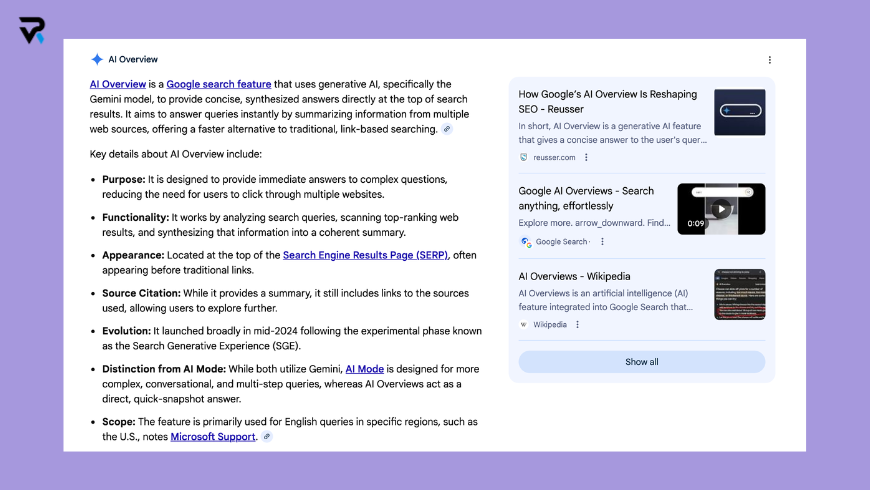
In other words, backlinks do not guarantee inclusion in AI Overviews, but they increase the probability by adding trust signals.
Similar read: Ranking Inside Google AI Overviews
What has replaced spam link building in 2026?
Spam link building has not been replaced by a new shortcut. It has been replaced by strategy.
Modern link acquisition focuses on earning links rather than building them artificially. Research-driven content, original case studies, industry insights, digital PR campaigns, and expert collaborations generate contextual backlinks naturally.
For example, when a company publishes original data or actionable SEO insights, other blogs and publications cite it as a reference. Those citations become high-quality backlinks. Similarly, expert contributions, podcast appearances, and thought leadership pieces create editorial links that carry far more value than paid placements.
Internal linking also plays a supporting role. While not a backlink itself, internal link structure distributes link equity across key pages, strengthening overall domain performance.
This shift represents a broader change in search engine optimization: authority must be earned.

Are backlinks the most important SEO factor in 2026?
Backlinks are not the only ranking factor, nor are they independently sufficient.
Modern SEO performance depends on the integration of:
- Technical SEO health, including site speed and crawlability.
- Search intent alignment and keyword relevance.
- Content depth and semantic optimization.
- User engagement metrics such as dwell time.
- Structured data implementation.
- Brand authority and backlink profile strength.
Backlinks amplify strong foundations. Without technical optimization and quality content, backlinks alone cannot sustain rankings. Conversely, strong content without authority signals may struggle in competitive SERPs.
SEO success in 2026 is systemic, not isolated.
Can businesses succeed without a backlink strategy?
For new websites targeting micro-niches, it is possible to gain visibility through long-tail keyword optimization and semantic clustering. However, as competition increases, backlink strategy becomes imperative.
Any professional SEO agency operating in competitive markets understands that organic growth requires authority building. Ignoring backlinks entirely limits scalability.
The smarter approach is not aggressive link building but strategic authority development through relevance, credibility, and relationship-driven outreach.
So, are backlinks still worth investing in?
Yes — but only when approached correctly.
Backlinks in 2026 are not about manipulation. They are about validation. They support domain authority, improve search engine rankings, strengthen E-E-A-T signals, and facilitate long-term organic traffic growth.
The landscape has matured. Quantity has been replaced by quality. Automation has been replaced by expertise. Sustainable strategy has replaced short-term tactics.
Backlinks are no longer a loophole in the algorithm. They are part of the trust architecture that search engines rely on.
For businesses aiming to compete seriously in search results — and more particularly for those working with an experienced SEO agency — backlinks remain a strategic asset, not an outdated relic.