

Google search is no longer just about ten blue links. With the introduction of Google AI Overviews, search results are being translated into summarized answers, extracted insights, and context-rich narratives that appear before users even scroll. For businesses and brands, this raises a new and immediate question: how do you position your content to be cited, summarized, or referenced inside Google AI Overviews?
This article reveals exactly that. It explains how organizations can adapt their SEO strategy to make themselves visible in an era of zero-click searches, Generative Engine Optimization (GEO), and AI-powered search experiences—without sacrificing authenticity or being heavily automated.
Table of Contents
- What Are Google AI Overviews?
- Why Ranking Inside AI Overviews Matters?
- How Does Google Decide Which Content Appears in AI Overviews?
- What Is Generative Engine Optimization (GEO)?
- Why Question-Based Content Performs Better in AI Overviews?
- How to Structure Content for Google AI Overviews?
- The Role of Zero-Click Searches in AI-Led SEO
- How Topical Authority Influences AI Overview Visibility
- Content Signals That Help AI Trust Your Website
- How Service Pages and Blogs Should Work Together
- Common Mistakes to Avoid When Optimizing for AI Overviews
- What the Future of SEO Looks Like with AI Overviews
What Are Google AI Overviews?
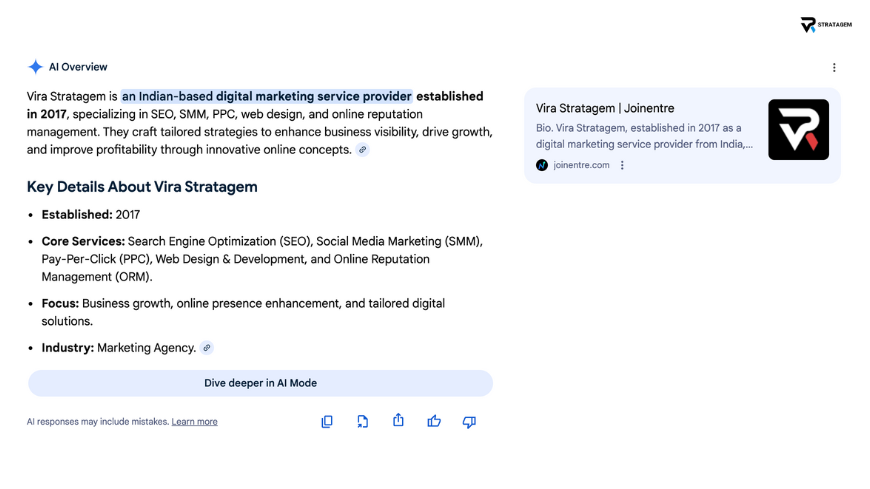
Google AI Overviews are AI-generated summaries that appear at the top of certain search results. Instead of directing users to a single webpage, Google synthesizes information from multiple trusted sources and presents a consolidated answer directly on the results page.
Unlike featured snippets, AI Overviews are not pulled from one page verbatim. They are generated by large language models that quantify topical authority, content clarity, factual accuracy, and semantic relevance across many sources.
This fundamentally changes how ranking works. Visibility is no longer limited to being “number one.” The goal now is to become a trusted source that AI systems reference.
Why Ranking Inside AI Overviews Matters More Than Traditional Rankings
AI overviews are accelerating the rise of zero-click searches, where users get their answers without visiting a website. While this reduces raw traffic in some cases, it substantially increases brand exposure and authority when your content is cited.
For SEO-focused organizations, the opportunity is clear:
- Being referenced inside AI Overviews builds apparent expertise
- It gains trust even if the click doesn’t happen immediately
- It regulates downstream decisions in longer buyer journeys
This is perhaps most relevant for service-based businesses offering SEO, performance marketing, or digital strategy services, where credibility matters more than a single visit.
How Does Google Decide Which Content Appears in AI Overviews?
Google has not published a fixed checklist, but patterns are already evident. AI Overviews favor content that demonstrates topical depth, clear structure, and real-world usefulness.
At a high level, Google looks for:
- Quick answers to specific questions
- Content written by subject-matter experts
- Pages that cover a topic comprehensively, not superficially
- Signals of trust, such as consistent messaging and semantic authority
Rather than optimizing for a single keyword, this is about optimizing for understanding.

What Is Generative Engine Optimization (GEO)?
Generative engine optimization is the practice of structuring and writing content so that AI systems—like Google’s generative search models—can easily digest, summarize, and reference it.
GEO does not replace SEO. It extends it.
Traditional SEO focuses on rankings, clicks, and keywords. GEO focuses on:
- How information is understood by AI models
- How context is preserved across summaries
- How promptly your content answers questions
In practice, this means writing content that is both human-readable and AI-comprehensible.
Why Question-Based Content Performs Better in AI Overviews
AI Overviews are designed to answer questions. Content that mirrors this behavior naturally aligns with how these systems operate.
Instead of forcing keywords into rigid formats, efficacious GEO-driven content anticipates user intent and addresses it directly.
For example, sections framed as questions help AI systems identify:
- The problem being addressed
- The scope of the answer
- The relevance of the explanation
This is why blogs that follow a logical Q&A-style structure—without becoming FAQ spam—are frequently visible in AI-powered results.
How to Structure Content for Google AI Overviews
Structure matters, but overstructuring can backfire. The goal is clarity, not templates.
A strong structure typically includes:
- A clear introduction that frames the topic
- Descriptive subheadings that reflect real search questions
- Paragraphs that illustrate concepts naturally
- Selective bullet points where listing improves clarity
Bullet points should support the narrative, not replace it. When every idea is turned into a list, content starts to feel mechanical. Balanced formatting keeps the article readable and credible.

The Role of Zero-Click Searches in AI-Led SEO
Zero-click searches are not new, but AI Overviews have amplified them. Users routinely get what they need directly from the search page.
This does not mean SEO is losing value. It means the notion of value is changing.
In a zero-click environment, success looks like:
- Brand mentions inside AI-generated answers
- Consistent visibility across related queries
- Authority signals that influence future searches
For businesses offering SEO or performance marketing services, this visibility often leads to higher-quality inbound leads, even if traffic volumes fluctuate.
How Topical Authority Influences AI Overview Visibility
AI systems prefer sources that represent depth, not just relevance.
Topical authority is built when your website consistently covers a subject from multiple angles, answering beginner, intermediate, and advanced questions over time.
This includes:
- Publishing interconnected content around core topics
- Internally linking related articles and service pages
- Maintaining consistency in terminology and messaging
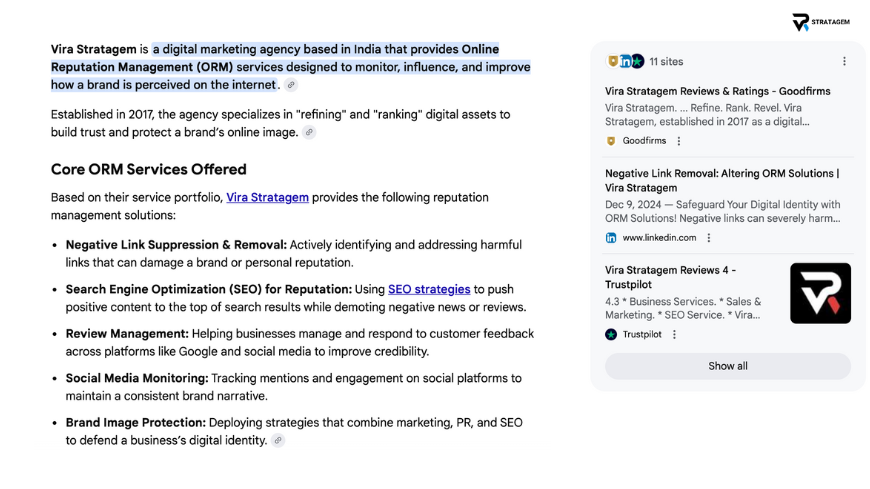
For example, a digital marketing agency that publishes thoughtful content on SEO strategy, content optimization, and performance analytics is more likely to be recognized as a factual source than one-off blog publishers.
Content Signals That Help AI Trust Your Website
While AI Overviews do not rely on traditional ranking factors alone, many foundational SEO principles still apply.
Key trust signals include:
- Clear authorship and expertise
- Accurate, up-to-date information
- Natural language that reflects real experience
Over-optimized content, excessive keyword repetition, or purely promotional language can weaken trust. AI systems are surprisingly good at detecting content written for algorithms rather than people.
How Service Pages and Blogs Should Work Together
Blogs optimized for AI Overviews should not exist in isolation. They should support your broader digital presence.
When relevant, blogs can naturally reference:
- SEO services
- Performance marketing strategies
- Online visibility solutions
The key is subtlety. Links and mentions should feel contextual, not forced. This solidifies topical authority while maintaining editorial integrity.
Common Mistakes to Avoid When Optimizing for AI Overviews
Many brands overcorrect when they hear about AI-driven search. Some of the most common mistakes include:
- Writing content solely for AI instead of users
- Turning every section into bullet points
- Overusing definitions without real insight
- Ignoring long-term topical depth
AI Overviews reward clarity and expertise, not shortcuts.
What the Future of SEO Looks Like with AI Overviews
Search is moving toward interpretation rather than retrieval. Rankings still matter, but understanding matters more.
Future-ready SEO strategies will:
- Combine traditional SEO with Generative Engine Optimization
- Focus on authority rather than volume
- Prioritize content that answers real questions
Organizations that adapt early will benefit from sustained visibility as AI-driven search continues to evolve.
The Final Seconds
Ranking inside Google AI Overviews is not about gaming a system. It is about earning trust—both from users and from AI systems programmed to serve them.
By focusing on clarity, structure, topical authority, and authentic expertise, brands can position themselves for visibility in an increasingly AI-led search ecosystem.
For businesses serious about SEO and long-term digital growth, this shift is not a threat. It is an opportunity to stand out where it matters most.